How to Help Your Child Feel Safe When the World Doesn't w/ Courtney Reissig
Establishing Necessary Boundaries
Equipping parents during their child’s academic years to bring learning to daily moments.
The Parenting IQ Podcast is a part of the Christian Parenting Podcast Network. To find practical and spiritual resources to help you grow into the parent you want to be, visit www.christianparenting.org
On today’s episode…
When the world feels scary, how do we help our kids feel safe without pretending that hard things won’t happen? In this episode, Dr. Kelly Cagle talks with Courtney Reissig about helping children process fear, navigate difficult questions, and find security in God even when we don’t have all the answers. They share practical ways parents can filter overwhelming information, create healthy boundaries around the news, and point their kids toward hope in a broken world.
Show Notes
How to Help Your Child Feel Safe When the World Doesn't
Our kids are growing up with access to more frightening information than ever before. Natural disasters, school shootings, wars, violence, and tragedies can appear on a screen before we’ve even had time to process them ourselves.
As parents, our job isn’t to convince our children that nothing bad will ever happen. We can’t promise that.
Instead, we can teach them what to do with fear when it comes.
In my conversation with Courtney Reissig, author of Seth and the Very Scary Storm, we talked about how her family navigated fear after a devastating tornado tore through their community—and what that experience taught her about helping children feel safe in a world that sometimes isn’t.
1. Don't Promise Your Child That Nothing Bad Will Happen
When our kids are afraid, our instinct is often to immediately reassure them:
“It’s going to be fine.”
“That won’t happen here.”
“You don’t need to worry about that.”
But sometimes scary things do happen.
Courtney experienced this firsthand. Before the tornado hit Little Rock, she reassured her boys that tornado warnings happened all the time and that it probably wouldn’t affect them. Then a tornado devastated parts of their city.
A better foundation for security isn't “Nothing bad will happen.”
It's “Whatever happens, God will be with us.”
That gives our children something much stronger to hold onto.
2. Let "I Don't Know" Be an Answer
After the tornado, one of Courtney's sons asked a heartbreaking question:
“Was God mad at us?”
Children often ask the same questions adults do when something terrible happens.
Why did God allow this?
Why didn't He stop it?
Did we do something wrong?
We may feel pressure to provide a theological explanation that makes everything make sense. But sometimes the most honest answer is simply:
“I don't know why.”
Courtney pointed to John 9, where Jesus encounters the man who was born blind. The people around Him wanted an explanation for his suffering too. Jesus redirected their assumptions about why it happened and toward the work God would display through his life.
Our children need to know that unanswered questions don't mean God has abandoned them.
We can hold questions and trust God at the same time.
3. Be the Filter for What Your Child Needs to Know
Our children don't need access to every frightening thing happening in the world.
Parents can act as a filtration system.
Before sharing information, ask:
Does my child need to know this right now?
Consider their age, maturity, emotional state, proximity to the situation, and whether the information actually helps them respond wisely.
There is a difference between helping children understand reality and exposing them to details they aren't emotionally prepared to carry.
We don't have to hide the world from our kids—but we don't have to hand them the weight of the entire world either.
4. Help Them Separate a Real Threat From a Distant One
Fear can make everything feel close.
A child sees something happening across the country—or across the world—and suddenly wonders:
“Is that going to happen to me?”
Help them put the situation into context.
Where is this happening?
Is it happening near us?
Is there something we need to do to stay safe?
Is this something we can actually control?
This doesn't dismiss their fear. It helps their brain understand the difference between being aware of something scary and being in immediate danger.
5. Show Them What We Can Do in the Middle of Brokenness
After the tornado, Courtney's family couldn't undo what happened.
But they could serve.
They participated in disaster relief. They helped people recover belongings. They prayed with hurting families. They offered comfort.
Their children got to see that when the world is broken, followers of Jesus don't have to stand helplessly on the sidelines.
We can become the hands and feet of Jesus.
Sometimes one of the best ways to move through fear is to ask:
“Who can we help?”
Fear turns our attention inward. Serving reminds our children that even when they can't control what happened, they can still bring God's love into the middle of it.
6. Give Your Child a Hope Bigger Than Their Fear
One of the most powerful moments Courtney shared happened while her family was driving through an area devastated by the tornado.
Her son looked at the destruction and said:
“Someday, Jesus is going to make all this new.”
That is the hope we ultimately want to give our children.
We don't have to pretend the world isn't broken. Scripture tells us that it is.
But brokenness doesn't get the final word.
When your child is afraid, remind them:
This isn't how the story ends.
God is still good. God is still present. And one day, He will make all things new.
Key Takeaways for Parents
Don't promise that scary things will never happen; remind your child that God will be with them when hard things happen.
Give yourself permission to say, “I don't know.”
Filter news and information based on what your child actually needs to know.
Help children distinguish between something frightening happening somewhere and an immediate threat to them.
Look for opportunities to turn fear into compassion, prayer, service, and action.
Keep pointing your children toward the hope that the brokenness they see today will not last forever.
Helping Our Kids Live With Courage
Our goal isn't to raise children who never feel afraid.
Fear is a normal human emotion.
Our goal is to raise children who know where to go with their fear.
We can listen to their questions. We can sit with them when answers don't come. We can give them age-appropriate information. We can show them how to love their neighbors in the middle of suffering.
And most importantly, we can continually point them back to the truth that their security isn't found in a world where nothing bad ever happens.
Their security is found in a God who remains with them through it all.
About Courtney Reissig
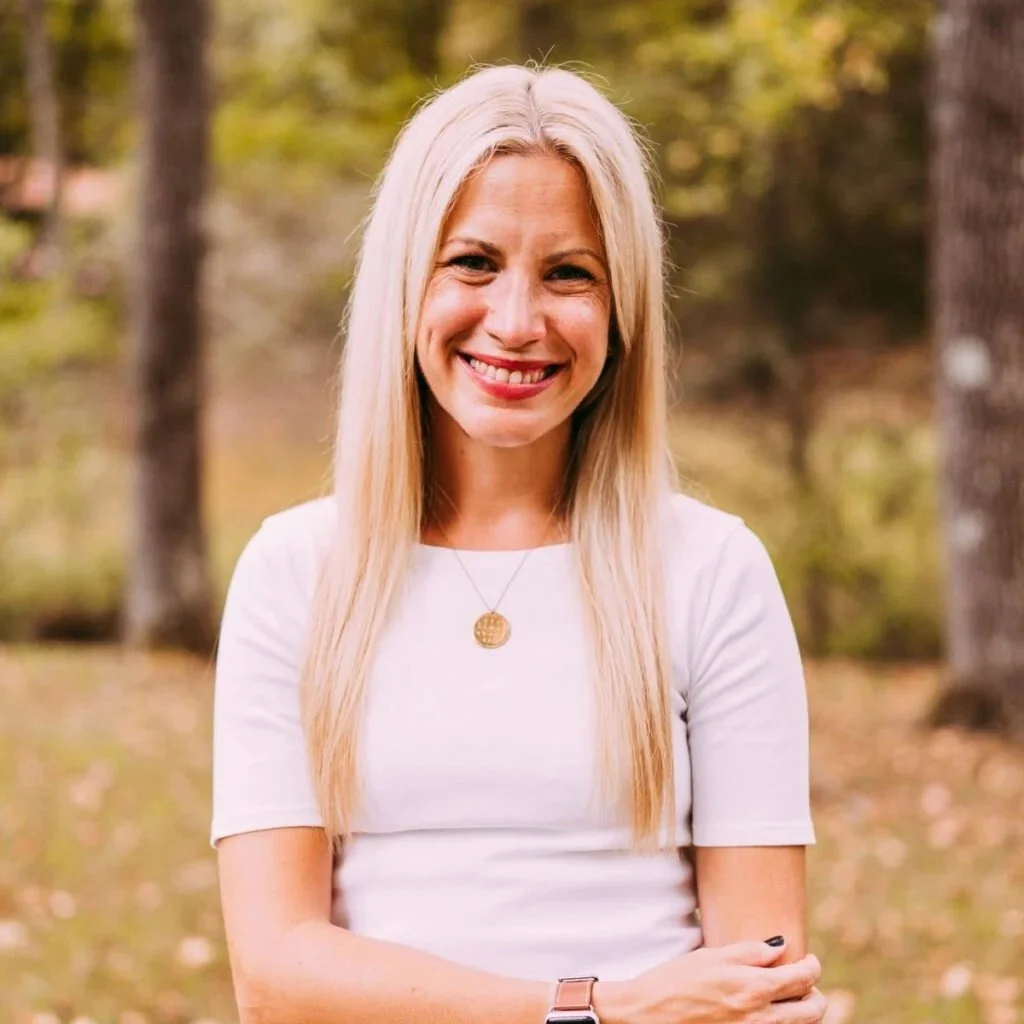
Courtney Reissig is an author, Bible teacher, and high school teacher who is passionate about helping families understand God’s truth in the midst of a broken world. After her family experienced a devastating tornado in Little Rock, Arkansas, she began helping her own children process fear, suffering, and difficult questions about God. That experience inspired her children’s book, Seth and the Very Scary Storm, which helps kids understand that even when we don’t have all the answers, we can trust that God is with us and will one day make all things new.

A game-changing program for parents raising kids with ADHD. In just five weeks, you’ll gain strategies to reduce chaos, improve communication, and create daily rhythms that bring calm and connection back to your family life.
How to Master ADHD at Home in 5 Weeks
If you’re tired of repeating yourself over and over—whether it’s simple instructions, daily routines, or reminders—and feeling unheard or ignored… You don’t have to wait for change. You can create it!
This course provides step-by-step tools to radically change your home rhythm… in just 5 weeks.